The Foundation for a Better Life
All the Right Steps.
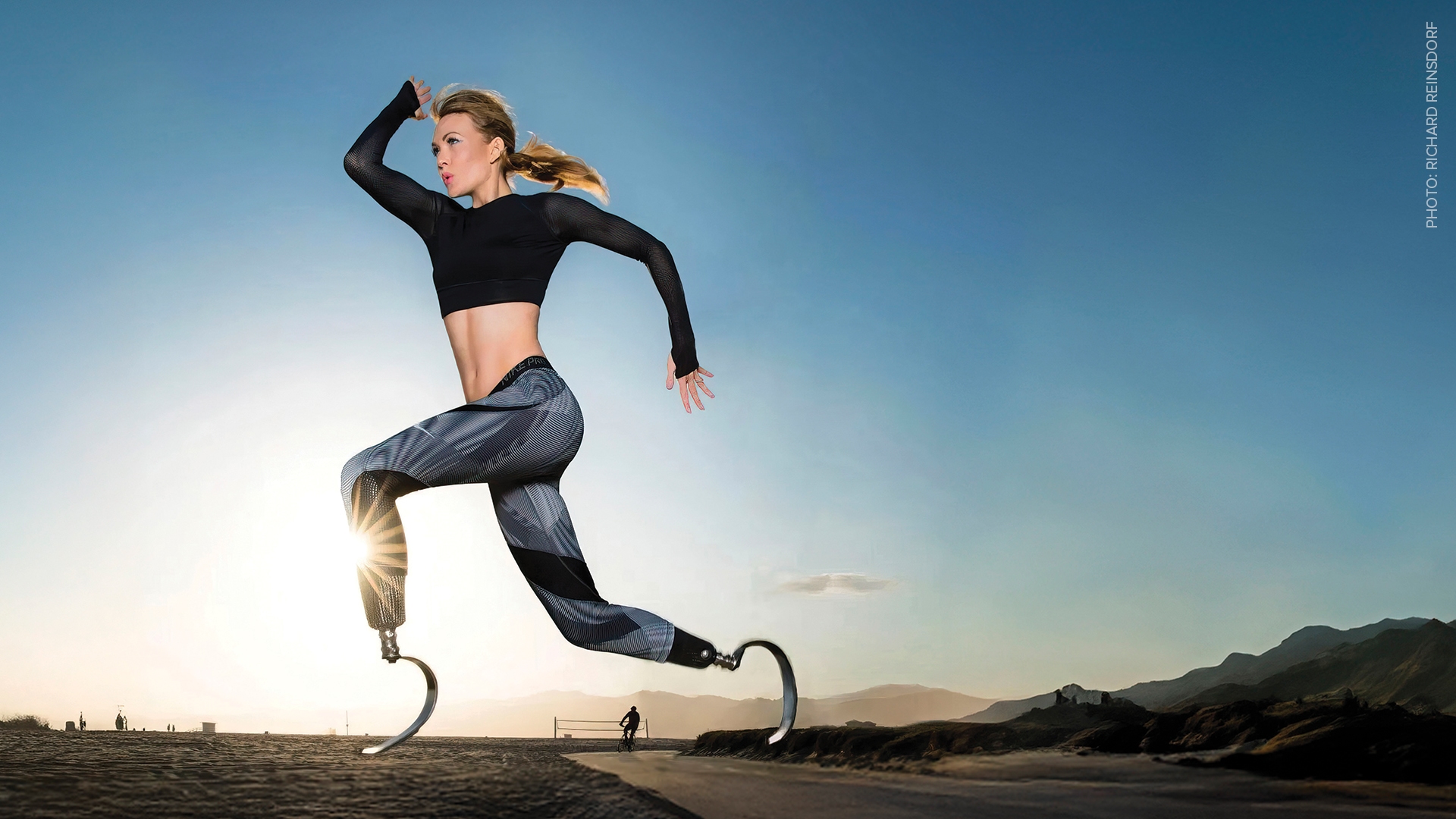
Amy Purdy lost her legs to bacterial meningitis at age 19. Undaunted, she went on to win multiple gold medals in snowboarding, create an action sports program for kids with disabilities, appear on “Dancing With the Stars” and become one of the most sought-after motivational speakers in the world.
By The Foundation for a Better Life
At 15 years old, Amy Purdy took up snowboarding. The spunky blonde athlete had grown up in a family of skiers, but she was determined to carve her own path. As it turned out, her greatest obstacle wasn’t the steep terrain or the cold. It was a rare septic infection.
The infection came on so fast that flu-like symptoms became life-threatening on the way to the hospital. At 19 years old, Purdy was given a 2% chance of survival. Many operations later, she was minus a spleen, both kidneys and both her legs just below the knee.
Her father supplied a kidney, and Purdy went to work building a custom snowboard so she could compete in the USASA National Snowboarding Championship. She won three medals. The snowboard, with its duct-taped binding and bolted-on feet, now sits in the Smithsonian.
But the story doesn’t end there. Purdy went on to win medals in the Paralympics in both 2014 and 2018. Days after stepping off the podium in South Korea, she stepped onto the dance floor to compete on “Dancing With the Stars.” Her charisma, energy and creativity captured millions of viewers. Never one to shy away from the attention, Purdy embraced it and leveraged it to bring awareness to the causes she felt deeply about. She has collaborated with the International Olympic Committee and promotes sustainability, inclusivity, peacebuilding and gender equality.
At a time when athletes seem to rise above the rest of humanity with their perfected bodies, Purdy has embraced flaws and focused on the beauty that comes from within, the perfection of an honest effort, the idealism of acceptance, and the courage to live life according to your dreams and not your disabilities.
“Our real limitations are the ones we believe,” she says. “When we’re focused and determined enough, we are capable of so much.”
Through the adversity, Purdy reinvented herself.
“When I lost my legs, I had no idea what to expect. But if you ask me today if I would ever want to change my situation, I would have to say no. Because my legs haven’t disabled me. If anything, they’ve enabled me. They forced me to rely on my imagination and to believe in the possibilities. And that’s why I believe that our imaginations can be used as tools for breaking through borders, because in our minds, we can do anything, and we can be anything. It’s believing in those dreams and facing our fears head-on that allows us to live our lives beyond our limits.”
Step Up To Challenges… PassItOn.com®
Copyright ©2025 The Foundation for a Better Life. All rights reserved. Available under a Creative Commons Attribution NonCommercial-NoDerivatives 4.0 License (international): https://creativecommons.org/licenses/by-nc-nd/4.0/

The Foundation for a Better Life, a 501(c)(3) non-profit organization, gives your newspaper permission to publish these stories in print and electronic media (excluding audio and video), provided the stories are published in their entirety, without modification and including the copyright notice. For any modification, permission must first be obtained from the Foundation by emailing media-relations@passiton.com. Thank you.
We add new stories each month. If you'd like to be notified when we publish new stories, enter your information below.